
Your Old Website Isn’t Fine – It’s a Ticking Time Bomb
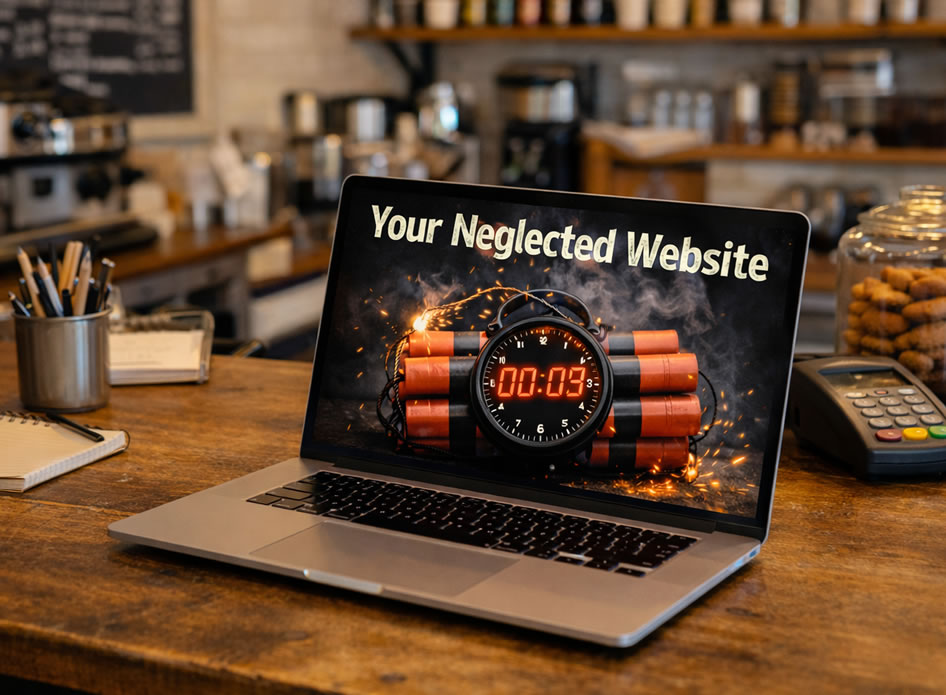
There’s a certain type of business owner who treats their website like an old ute parked behind the shed.
“It still runs,” they say, with the same misplaced confidence as someone who hasn’t opened the bonnet since 2009. But from where I’m standing, your website isn’t a trusty old Hilux. It’s more like a 1978 Leyland P76 with three flat tyres, a family of possums living in the engine bay, and a note on the windscreen that says “Don’t touch – might start.”
The Slow Creep of Plugin Problems
Let’s start with plugins, those clever little bits of code that make your website do useful things – forms, sliders, bookings, galleries, all the digital bells and whistles. When they’re updated regularly, everything works as it should: secure, smooth, and quietly getting on with the job. Ignore those updates, however, and things don’t unravel politely. They begin with small annoyances – a form that stops sending emails, a layout that shifts slightly – but underneath, something far more sinister is brewing.
Because outdated plugins are one of the easiest entry points for hackers. Known vulnerabilities get published, and from that moment on, it’s open season. Automated bots scan the internet day and night looking for sites that haven’t been updated. When they find one, they don’t knock. They walk straight in.
Hackers, Injections, and Digital Vandalism
This is where things go from “a bit annoying” to “proper disaster.” Once inside, attackers don’t just sit quietly admiring your homepage. They inject code – hidden scripts, spam links, malicious redirects – all tucked neatly into your files or database where you won’t see them.
Your website might still look normal at first glance, but behind the scenes it’s been turned into a digital crime scene. It could be sending your visitors off to dodgy websites, installing malware on their devices, or quietly stuffing your pages with spammy links to boost someone else’s SEO. Sometimes it’s even worse – your site becomes part of a bot network, helping launch attacks on other websites while you sit there completely unaware.
And the real kicker? Google notices. Browsers notice. Suddenly your site gets flagged as unsafe. Visitors are greeted with a big, angry warning screen telling them your website might harm their computer. At that point, you’re not just losing customers – you’re losing trust, credibility, and any chance of someone clicking “Proceed anyway.”
Running on Ancient PHP
Then there’s PHP, the engine under the bonnet. If your website is still running on something like PHP 5.6 or 7.0, you’re not just behind the times – you’re effectively leaving the doors unlocked with the keys in the ignition. Older versions of PHP are no longer supported, which means security vulnerabilities are never patched. Ever.
Modern browsers expect speed, security, and clean code. What they don’t expect is a website powered by outdated technology that can’t defend itself. The symptoms might start small – slow load times, broken features – but the real issue is that your entire site becomes an easy target. It’s not a question of if something goes wrong, it’s a question of when.
The Silent Customer Killer
Here’s the part most people don’t realise: your customers won’t tell you any of this is happening. They won’t ring up and say, “Hey, your website just tried to send me to a sketchy casino site.” They won’t email to say your contact form failed because a script broke it.
They’ll just leave. Instantly. And they won’t come back.
Worse still, if your site has been flagged as unsafe, they may never even see your content. They’ll hit a warning screen and back out faster than you can blink. Meanwhile, your competitor – whose website is updated, secure, and functioning – gets the business without even trying.
The Sudden, Spectacular Failure
This is what makes neglect so dangerous. It doesn’t always explode immediately. Your site might limp along, infected but still functioning, quietly causing damage in the background. Then one day, everything stops. The site goes down. Files get corrupted. Access is locked. Or your hosting provider suspends the account because your site is now a security risk to others.
And it won’t happen at a convenient time. It’ll happen when you’re busiest, when customers are trying to contact you, when you’ve just launched something new. That’s when your neglected website decides to completely fall apart.
The Reality Check
Maintaining a website isn’t optional. It’s not a “nice to have.” It’s basic upkeep. Plugins need updating, PHP needs upgrading, and security needs to be taken seriously. Because the internet is full of automated systems actively looking for weaknesses, and if your site has one, it will be found.
This isn’t about being paranoid. It’s about being realistic. An outdated website isn’t just slow or clunky – it’s vulnerable. And once it’s compromised, the damage goes far beyond a broken page. It affects your reputation, your customers, and your business as a whole.
So if your website is sitting there untouched, quietly ageing and “still working,” just remember: somewhere out there, something is scanning for it right now. And when it finds it, it won’t hesitate.

 greg@tropicalcoastwebdesign.com.au


