
The Local SEO Basics Every Small Business Website Need
There is a strange thing that happens with small business websites.
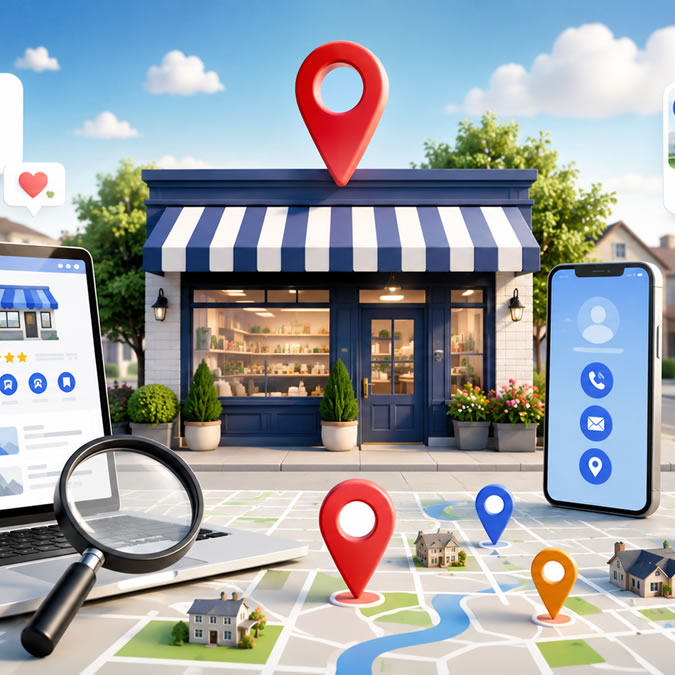
A business owner spends good money getting a website built. It looks nice. The logo is there. The contact form works. There is probably a photo of someone smiling while holding a spanner, coffee cup, clipboard or small dog.
Then they sit back and wait for Google to deliver customers by the truckload.
And then nothing happens.
This is usually when someone says, “Websites don’t work.”
Which is a bit like buying a ute, parking it in the shed, never putting fuel in it, and then complaining it has failed to tow a boat.
Your website can work. But if you want local people to find it, Google needs to know who you are, what you do, where you are, and what areas you service.
That is where local SEO comes in.
Start with your Google Business Profile
Your Google Business Profile is one of the most important online listings your business can have.
It is what helps you appear on Google Maps and in local searches like “plumber near me”, “hairdresser Ingham”, “Bowen accommodation” or “electrician Tully”.
At the very least, your profile should include your correct business name, phone number, website, address or service area, opening hours, business category, photos and a clear description of what you do.
It is not glamorous. Nobody is making a movie about someone updating their Google Business Profile. But it matters.
Use local keywords properly
Local keywords are the words people type into Google when they are looking for a business in your area.
For example:
- “builder in Ingham”
- “mechanic Cardwell”
- “bookkeeper Cairns”
- “website designer North Queensland”
The trick is to use these words naturally. Do not write nonsense like “Ingham plumber for Ingham plumbing in Ingham”. That sort of thing should be buried in a paddock.
Instead, write like a normal human:
“Based in Ingham, we provide plumbing services across the Hinchinbrook region, including Halifax, Forrest Beach, Trebonne and Cardwell.”
That tells Google where you work and tells customers they are in the right place.
List the towns and suburbs you service
If you service more than one town, say so.
This is especially important for regional businesses. Your customers may come from nearby towns, beach communities, farming areas or surrounding districts.
Mention the places you genuinely service on your homepage, contact page, footer or service pages.
But keep it real. Do not list every town from Cairns to Cape York because you once drove through it in 2008 and bought a pie.
Make your contact details obvious
If someone wants to call you, they should not need a search party to find your phone number.
Your website should have clear contact details, including a clickable phone number, email address or contact form, address if customers visit you, service area if you travel, and opening hours if relevant.
These details should also match your Google Business Profile, Facebook page and online directories. If Google sees three different phone numbers and an address from 2016, it may not trust the information.
Ask for reviews
Reviews matter. Customers read them. Google notices them.
The problem is that happy customers often forget to leave one. So ask.
After a job is done, send a simple message with a link to your Google review page. Keep it polite and easy.
Good reviews help build trust before someone even contacts you.
Create location-based service pages
If you offer important services in different towns, consider creating pages for them.
For example:
“Air Conditioning Installation in Ingham”
“Electrical Services in Cardwell”
“Bookkeeping for Small Businesses in Tully”
Each page should be useful and specific. Do not copy the same page twenty times and simply swap the town name. Google has seen that trick before and is not impressed.
Keep your website alive
Your website should not be treated like an old brochure sitting in a drawer.
Update your services. Add new photos. Share recent projects. Add testimonials. Write helpful blog posts. Check your contact details.
Local SEO is not magic. It is simply making it clear what you do, where you do it, and why local customers should choose you.
And that can make all the difference.

 greg@tropicalcoastwebdesign.com.au


