
Is your website a dinosaur?
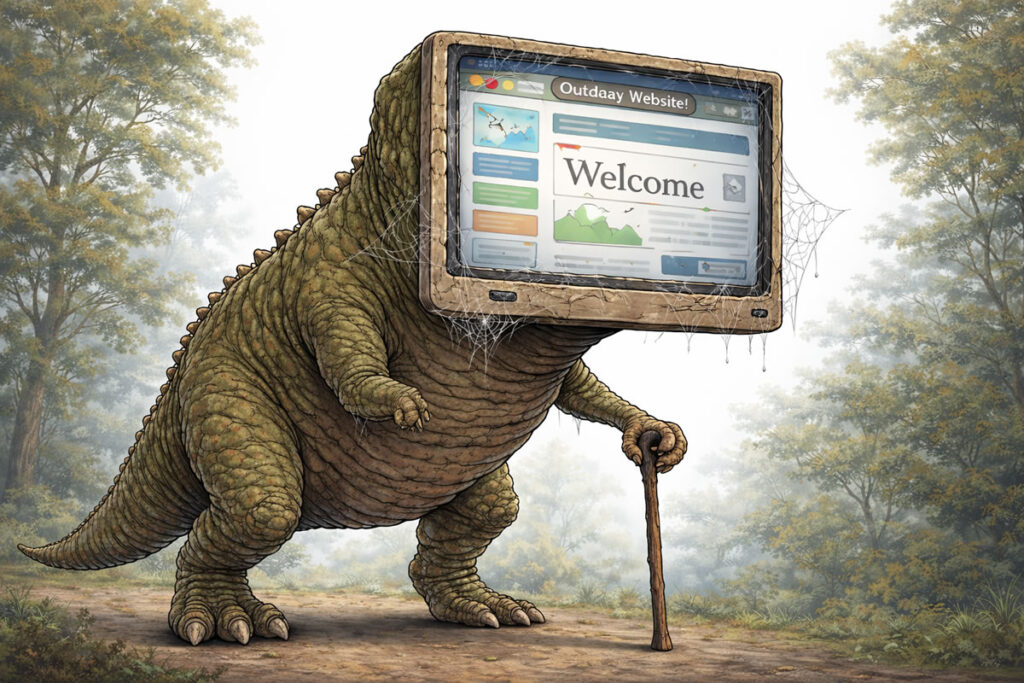
Many small business websites quietly keep doing their job year after year.
If the information is still correct and the phone still rings occasionally, it can feel like there’s no urgent need to change anything.
Unfortunately, websites age in ways that aren’t always visible on the surface, and running an outdated site can create risks for both your business and your customers.
Here are some of the key dangers of leaving an old website untouched for too long.
Security vulnerabilities
One of the biggest risks is security. Websites built on platforms like WordPress rely on a collection of themes, plugins and core software. These components are regularly updated by developers to patch security holes.
If your website is several years old and no longer maintained, it may be running outdated software with known vulnerabilities. Hackers actively scan the internet looking for these weaknesses. Once a site is compromised, it can be used to distribute malware, send spam emails, or redirect visitors to suspicious websites.
For eCommerce sites, the risk is even greater. A security breach could potentially expose customer information or payment details, which can damage your reputation and even create legal problems.
Compatibility issues
The internet changes constantly. Browsers update, devices evolve and new standards are introduced.
Older websites may begin to break in subtle ways. Contact forms stop working. Images fail to load correctly. Payment gateways stop integrating properly. A layout that once looked fine on desktop might appear broken or difficult to navigate on modern mobile devices.
Sometimes these problems go unnoticed by the business owner but are obvious to visitors, who may simply leave and try a competitor instead.
Poor performance and slow load times
Speed matters online. Visitors expect websites to load quickly, particularly on mobile connections.
Older websites often contain inefficient code, outdated plugins or oversized images that slow them down. Search engines like Google also factor page speed into rankings, meaning slow sites may appear lower in search results.
A delay of even a few seconds can be enough for potential customers to abandon a page before it finishes loading.
Search engine decline
Search engine optimisation has evolved significantly over the past decade. Older websites often lack many of the features that modern search engines look for, such as structured metadata, mobile-friendly layouts and fast performance.
This can cause a gradual drop in visibility over time. A site that once ranked well locally may slowly slide down the results as newer, faster and better optimised websites appear.
For businesses that rely on being found online, this can have a direct impact on enquiries and sales.
Outdated design and trust issues
First impressions online happen quickly. Visitors often judge the credibility of a business based on the appearance of its website.
An outdated design can unintentionally signal that a business is no longer active, not keeping up with technology, or not paying attention to detail. This is particularly important for eCommerce stores, where customers must feel confident enough to enter payment details.
Modern, clean design and clear navigation help build trust and encourage people to take the next step.
The bottom line
If your website is more than five to seven years old, it’s worth reviewing whether it’s still serving your business properly. In some cases a simple update or maintenance plan can keep things running smoothly. In others, a full redevelopment can bring major benefits in speed, security, search performance and user experience.
Your website is often the first impression potential customers have of your business. Keeping it modern, secure and reliable ensures it continues to work for you rather than quietly holding you back.

 greg@tropicalcoastwebdesign.com.au


